Landscape Lighting Design Principles for Western NY Homes: Curb Appeal Without Glare
Make yout home glow, not glare
When you start looking at landscape lighting design for Western NY homes, you’ll notice something quickly: a lot of outdoor lighting is either too harsh or too dim. You want your home to look inviting and secure, not like a parking lot or a dim outline you can barely see.
Between long winter nights, changing seasons, and a mix of historic and newer architecture across Buffalo, Niagara, and Genesee, good design matters more here than in many regions. You’re aiming for curb appeal, safety, and comfort—without blinding your family or your neighbors.
To make this easier, we use a simple model we call the GLOW Framework: Goals, Layers, Orientation, and Warmth. It’s how we walk you through what to light, how to light it, and how to avoid glare while getting maximum impact.
At Hearth and Halo, we’ve applied these principles on everything from compact city lots to larger suburban and rural properties, so we’ve seen what works—and what quickly becomes a frustration.
Key Takeaways
- You’ll leave with the GLOW Framework for landscape lighting: Goals, Layers, Orientation, and Warmth.
- The biggest mistakes Western NY homeowners make are over‑lighting, poor aiming, and ignoring layers, which leads to glare and flat, uninteresting yards.
- Getting design right boosts curb appeal, safety, and nighttime usability while reducing light pollution and neighbor complaints.
- Thoughtful placement and fixture choices protect your eyes, your privacy, and your investment over many seasons.
What You’ll Learn
- How to think about landscape lighting design strategically, not just “where can we stick a few fixtures.”
- Which layers of light (paths, architecture, plantings, and focal points) give the best visual payoff for Western NY homes.
- How aiming, beam spread, and mounting height affect glare, shadows, and overall comfort.
- The trade‑offs between different approaches: minimal safety lighting, classic curb‑appeal designs, and fully layered systems.
- Why warm color temperature, solid brass fixtures, and careful wiring matter for both ambiance and longevity.
- How to decide what you really need, so your system looks intentional and doesn’t overwhelm your home.
Main Content
Big Picture
Landscape lighting design is about how your property feels and functions after dark, not just where lights happen to land. In Western NY, that usually means:
- Clear, safe paths and entries in the snow and ice
- A house that looks welcoming from the street, not washed out
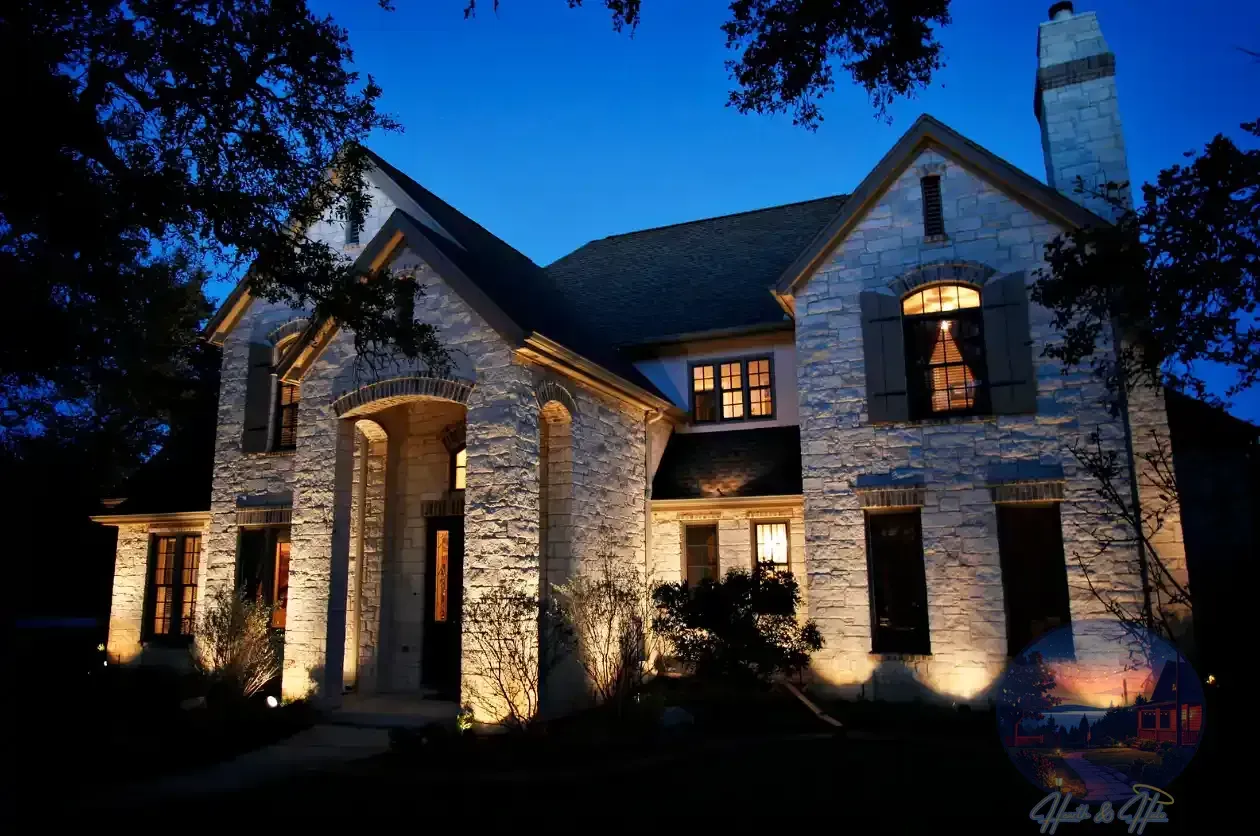
- Highlights on trees, stonework, and architecture that make your home feel special year‑round
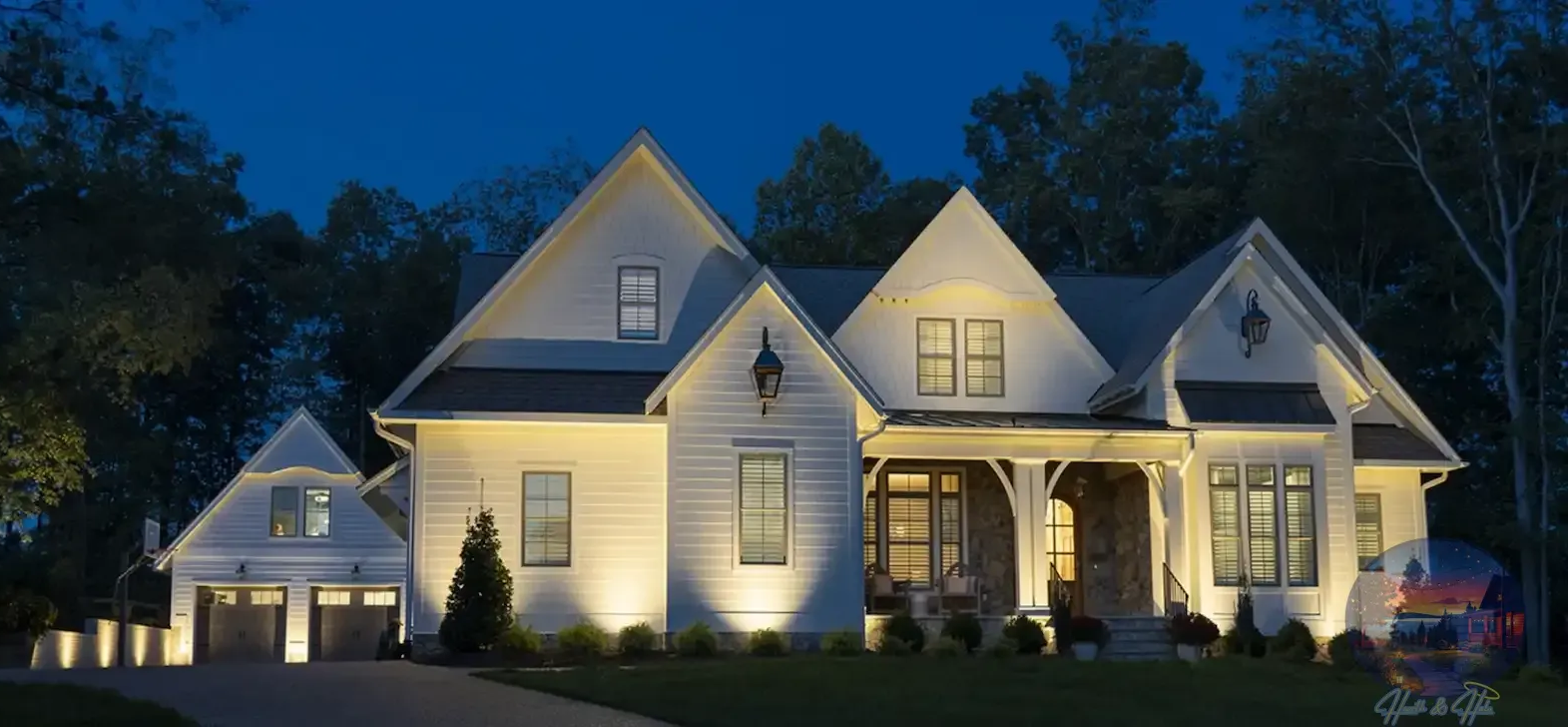
We treat “curb appeal without glare” as a design rule, not a slogan. That means we balance brightness, beam spread, and placement so your eyes can relax. A beautifully lit façade loses its magic if your guests are squinting at a path light or getting blinded by an uplight.
Here’s a quick story: a homeowner came to us after installing a handful of bright, hardware‑store path lights and floods. The walk was lit, but every step was a squint, and their neighbors could see sharp hot spots from their bedroom windows. We redesigned the system with lower‑glare path lights, carefully aimed accent fixtures, and soft, layered lighting on the house and trees. Same property, same goal of “safe and pretty”—but the new design felt calm and high‑end instead of harsh.
Key Decision Factors You Should Weigh
When we design landscape lighting for you, we walk through a few big decisions together.
1) Your Primary Goals (G in GLOW)
Are you prioritizing safety and navigation, curb appeal, or outdoor living?
- If safety is first, we ensure paths, steps, and entries are clear without over‑lighting.
- If curb appeal leads, we focus more on facade and feature lighting that creates depth and balance from the street.
Ignoring this step often leads to scattered fixtures that don’t really solve your main problem.
2) Which Layers Matter Most (L for Layers)
We think in layers, not one‑off fixtures. For Western NY homes, the most important layers usually include:
- Path lighting for walkways, sidewalks, and driveways
- Architectural lighting for the front of the house
- Plant and tree lighting for structure and seasonal interest
- Accent or focal lighting for special features (statues, stone walls, etc.)
Your budget goes further when we deliberately choose two or three layers to emphasize instead of sprinkling lights everywhere.
3) Glare and Orientation (O for Orientation)
This is where most DIY and low‑end installs go wrong. Orientation covers:
- Fixture aiming (so you see the effect, not the bulb)
- Beam spreads that fit your features without spilling into windows or neighbor yards
- Avoiding direct sightlines into bright sources from patios, porches, and sidewalks
When orientation is off, even expensive fixtures can feel cheap and uncomfortable.
4) Color Temperature and Mood (W for Warmth)
In Western NY’s long winters, warm white light (not blue‑white) usually feels best.
- Warmer tones flatter brick, stone, and landscaping and feel cozier in snow.
- Cooler tones may be appropriate in specific modern applications but can feel stark on traditional homes.
We choose temperature and intensity to support your home’s style and your own comfort.
5) Fixture Quality, Wiring, and Terrain
Design isn’t just about where light lands—it’s also about how the system holds up. We factor in:
- Solid brass fixtures for durability in freeze‑thaw cycles
- Proper splicing, copper/crimped connections, and heat‑shrink wraps to seal out moisture
- Trenching, routing under sidewalks and stone walls, and avoiding well lights that don’t fit our standards
Slopes, tight side yards, and mature plantings all affect how much work it takes to install a system that looks clean and lasts.
Options Compared
Here’s how different design approaches stack up.
| Approach | Best For | Key Advantages | Main Trade-Offs / Risks |
|---|---|---|---|
| Safety‑First Minimal | Homeowners on a tighter budget | Covers basics: paths, steps, and entry points | Limited curb appeal; little depth or drama |
| Classic Curb‑Appeal Design | Most Western NY homes | Balanced facade, paths, and a few accent trees or features | May leave some backyard or side areas unlit |
| Fully Layered Premium System | Larger or showcase properties | Multiple layers, second/third‑story highlights, strong depth | Higher investment; more planning and transformer capacity |
For many homes, a classic curb‑appeal design hits the sweet spot: clear walkways, an inviting entry, a well‑lit façade, and a couple of carefully chosen focal points like a specimen tree or stone wall. If you have a taller or architecturally rich home—or you entertain a lot outdoors—a fully layered premium system can transform how your property feels and functions at night.
Risks, Pitfalls, And Red Flags
Landscape lighting can go wrong in a few predictable ways.
Common pitfalls include:
- Over‑lighting paths and under‑lighting architecture, resulting in bright dots on the ground and a dark house behind them.
- Uplights aimed directly at windows, porches, or seating areas, causing glare instead of ambiance.
- Fixtures placed without regard to snow patterns, leading to buried or damaged lights in winter.
- Treating every feature as equally important, which flattens the whole scene and wastes budget.
We once met a homeowner who had dozens of inexpensive fixtures scattered around their yard. At night, everything was technically “lit,” but nothing looked intentional—there was glare on the driveway, dark spots by the steps, and bright beams in the living room windows. We reduced the fixture count, upgraded quality, and re‑layered the design around paths, façade, and key trees. With fewer lights used more intelligently, the property actually looked brighter, calmer, and much more refined.
If a proposal doesn’t mention glare control, fixture orientation, or how different layers work together, that’s a sign the “design” is really just a fixture list.
Our High‑Level Approach At Hearth and Halo
We apply the GLOW Framework on every Western NY project:
- Goals Clarified
We start by asking what you want to solve: safety, beauty, outdoor living, or a mix. We walk (or virtually “walk”) your property with you and talk through how you use it in different seasons and times of day. - Layered Design
Next, we decide which layers to emphasize—paths, architecture, plantings, and focal points. We use our Halo Framework for layers, making sure path lights, accent fixtures, and other elements work together instead of competing. - Orientation and Glare Control
We choose fixture types, locations, and aiming angles to light surfaces, not eyes. That means thoughtful placement around patios, porches, decks, and driveways so you enjoy the effect without seeing harsh sources. - Warmth and Mood Tuning
We select color temperature and brightness that match your home’s materials and your preferences, leaning toward warm, comfortable light that looks good in snow, rain, and summer evenings alike. - Installation Integrity
Finally, we install with long‑term performance in mind: solid brass fixtures, properly spliced and sealed connections, trenching and routing that respect your landscaping and hardscape, and careful work around second‑ and third‑story elements where needed.
Decision Checklist For You
As you think about landscape lighting for your Western NY home, use this checklist:
- I know my top priority (safety, curb appeal, outdoor living, or a combination).
- I’ve considered which layers matter most: paths, façade, plantings, and focal features.
- I care about glare control, not just brightness.
- I prefer warm, inviting light that fits our long winters and mixed seasons.
- I want durable fixtures and proper wiring, not a temporary or disposable setup.
- I’m looking for a partner who talks about design principles, not just fixture counts.
If you’d like to walk through this checklist with us, we can translate your answers into a clear landscape lighting plan tailored to your home and budget.
Local Notes For Western NY
Western NY’s climate shapes landscape lighting more than you might expect. Snow, ice, and freeze‑thaw cycles mean fixtures must be tough, connections must be sealed, and placement has to consider snow build‑up and plowing patterns.
Architecturally, we see everything from older Buffalo doubles and historic homes to newer builds in outlying areas. That variety means we adapt design principles to each façade: what works on a simple ranch in Genesee County will differ from a tall, detail‑heavy home near Niagara.
Short winter days and long evenings also make landscape lighting a daily part of life, not a rare “nice to have.” A good design can completely change how your home feels from November through March.
Conclusion & Next Steps
Thoughtful landscape lighting design for Western NY homes is about more than visibility—it’s about creating curb appeal and comfort without glare or overwhelm. Our **GLOW Framework—Goals, Layers, Orientation, and Warmth—**gives you a clear way to think about what to light, how to light it, and how to protect your eyes and your investment.
Done right, your lighting reduces stress instead of adding to it. You’ll feel safer walking in from the car, proud when you pull up at night, and more inclined to use your outdoor spaces after dark.
If you’re ready to see how these principles could apply to your own property, we invite you to explore our landscape lighting services and then reach out through our contact page to schedule a design conversation. We’ll help you turn your ideas into a calm, cohesive plan that makes your home glow—without the glare.
Contact Us Today!
Contact Us
Check Out Our Other Outdoor Lighting Blogs!