Ultimate Guide to Landscape Lighting in Erie, Niagara & Genesee County: Design, Safety, and ROI
Learn the HALO guide we follow for your Landscape Lighting Design!
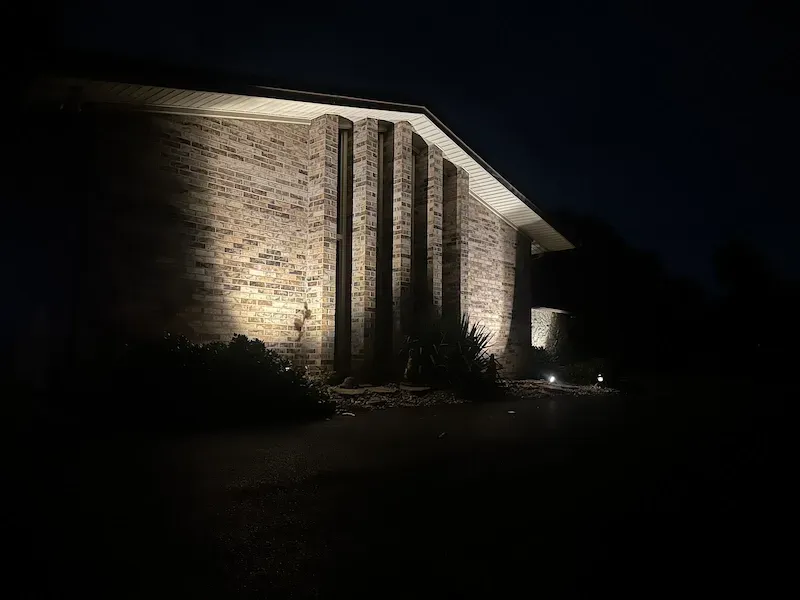
If you’ve ever pulled into your driveway on a dark Western New York evening and felt your property disappear into the shadows, you’re not alone. Between lake‑effect storms, long nights, and icy walkways, outdoor lighting in Erie, Niagara, and Genesee County isn’t just about looking pretty—it’s about feeling safe and proud of your home every time you come back to it.
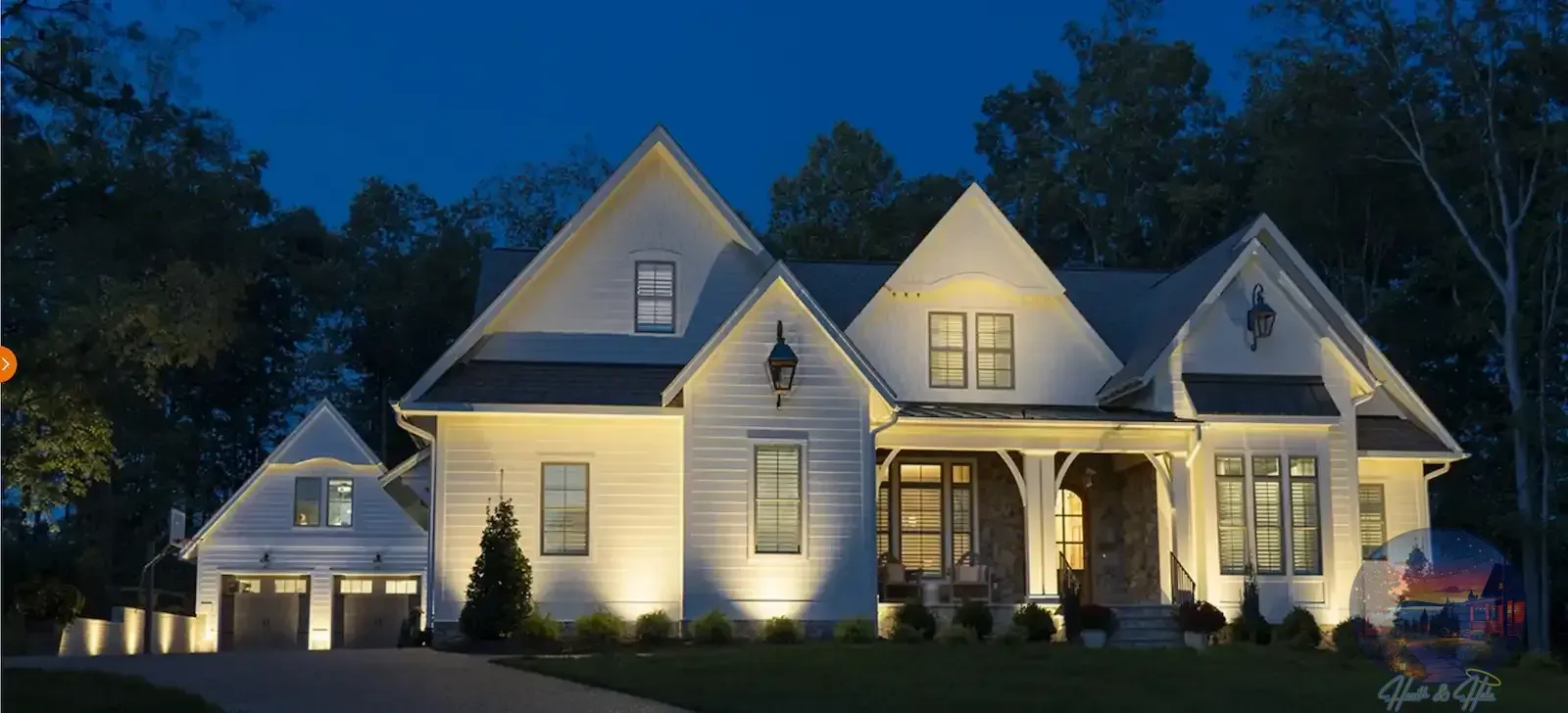
We think about landscape lighting through what we call the HALO Framework: Highlight, Access, Layers, Outcomes. It’s how we balance beauty, safety, and long‑term ROI for homes across these three counties, instead of just “adding more lights.” When you see your home softly outlined against the snow or your garden glowing on a summer night, that’s this framework at work.
At Hearth and Halo, we’ve installed countless systems across Erie, Niagara, and Genesee County using our own methods and materials. In this guide, we’ll walk you through how we approach design, safety, and ROI so you can feel confident about your next step—whether you’re just exploring ideas or ready to plan a full landscape lighting project.
Key Takeaways
- You’ll learn the HALO Framework so you can think about landscape lighting in Western New York in terms of impact, not just fixtures and watts.
- You’ll see the biggest pitfalls homeowners in Erie, Niagara, and Genesee County run into—like glare, uneven coverage, and cheap components that fail in winter—and how we avoid them.
- You’ll understand how smart placement and quality materials turn landscape lighting into a long‑term investment in curb appeal, safety, and home value.
- You’ll get clarity on which choices you can safely defer and which ones you need to get right the first time to protect your budget.
- You’ll walk away with a decision checklist you can use to prepare for a professional design conversation.
What You’ll Learn
- How to see landscape lighting in Erie, Niagara, and Genesee County as a strategic system, not scattered spotlights.
- The key design choices—beam spread, color temperature, and fixture placement—that shape both beauty and safety.
- The trade‑offs between basic, mid‑range, and premium systems in our climate, and who each option is best for.
- How long‑term ROI shows up in fewer accidents, better security, and a home that feels welcoming all year.
- What to watch for in installers, materials, and warranties so you’re not re‑doing the same project in three years.
- How our phased, high‑level approach keeps your stress down and your options open at every stage.
Main Content
Big Picture
When we talk about landscape lighting in Erie, Niagara, and Genesee County, we’re really talking about a lighting system that works with four realities: harsh winters, dark evenings, uneven terrain, and the unique character of older Western New York homes. Done right, your system ties together paths, entries, trees, and architectural details into one calm, cohesive nighttime experience.
This becomes a real opportunity at a few key moments: when you’re upgrading your outdoor living space, when safety on steps and walkways is starting to worry you, or when you realize your home disappears from the street after sunset. We see it in suburbs outside Buffalo, villages in Niagara County, and rural roads in Genesee County—a beautiful property that looks stunning at noon but flat and unsafe at 9 p.m. in January.
Here’s a quick mini‑story. A family on a rural road in Genesee County came to us after a near‑fall on their icy front steps. They’d tried a couple of solar stakes from a big‑box store, but the light was dim and patchy. We re‑designed their entry with low‑glare step lighting, warm architectural washes on the porch, and subtle path lights along the driveway. Within a week, they weren’t just safer—they were sending friends photos of how “cozy” their home looked in the snow.
Across Erie, Niagara, and Genesee County, we see the same pattern: when lighting is treated as an afterthought, you get hot spots, dark pockets, and frustration. When it’s designed as a system, you get confidence moving around your property, a more secure perimeter, and a home that feels “finished” day and night.
Key Decision Factors You Should Weigh
When we walk homeowners through landscape lighting decisions in these three counties, we focus on a set of practical factors rather than brands or gadgets:
- Climate and durability
Our winters are hard on fixtures, wiring, and connections from the Lake Erie shoreline to open fields in Genesee. You want components designed to handle freeze‑thaw cycles, moisture, and road salt. Ignore this, and you’ll be troubleshooting failures every February instead of enjoying your system. - Safety and code considerations
Steps, grade changes, and long driveways need consistent, non‑glare lighting. Over‑lighting can be as dangerous as under‑lighting if it blows out your night vision. We help you think about safe navigation for family, guests, and delivery drivers—whether you’re in a tight Erie County neighborhood or a darker rural stretch in Niagara or Genesee. - Design goals and curb appeal
Are you trying to highlight architecture, create a resort‑style backyard, or simply make walkways safer? Being clear on your goals upfront helps us decide where to invest more—uplighting trees, washing walls, or focusing on pathways—and where a lighter touch is enough. - Budget and phasing
You don’t have to do everything at once. In our work, we often phase projects: first entries and paths, then key trees and features, then fine‑tuning. If you ignore budget framing, it’s easy to overbuild a system you don’t need or underbuild one that never quite feels finished. - Maintenance and access
Every system needs occasional adjustments and component replacements over time. We design with access in mind so you’re not digging under mature plants or hardscape to fix a single fixture—whether that’s along a village sidewalk in Niagara County or a long driveway in Genesee County. - Control and flexibility
From simple timers to app‑based controls, how hands‑on do you want to be? In Western New York, seasonal changes are dramatic, so the ability to adjust schedules, brightness, or scenes without rewiring can be a real quality‑of‑life upgrade. - Long‑term ROI
The right system adds perceived value, safety, and usability to your property. The wrong one adds clutter and ongoing repair costs. We help you weigh up‑front spend against the peace of mind and enjoyment you want over the next 10+ years.
| Option | Best For | Key Advantages | Main Trade-Offs / Risks |
|---|---|---|---|
| Basic Path & Entry Lighting | Safety‑focused homeowners on a tighter budget | Improves navigation at entries, steps, and walkways; simple controls | Limited drama and curb appeal; fewer “wow” moments |
| Layered Architectural & Garden | Homeowners wanting a balanced “finished” look | Highlights architecture, key trees, and outdoor living areas; strong mix of beauty and safety | Higher upfront cost; benefits depend on good design |
| Premium, Fully Integrated | Long‑term planners and entertainers | Zoned control, scenes for seasons/events, highest flexibility and impact | Highest investment; requires careful planning and quality components |
For many homes in Erie, Niagara, and Genesee County, a layered architectural and garden system is the sweet spot: your entries are safer, your home looks intentional from the street, and your favorite trees or garden beds get the attention they deserve. A basic system can be a smart starting point if safety is your only concern, with room to grow later.
If you know you’ll be in your home for many years and love hosting—whether in a suburban Erie backyard, a lakeside Niagara property, or a wide Genesee County yard—a premium, fully integrated system can offer real ROI in comfort, security, and resale appeal. The key is matching your choice to how you actually live—not how a catalog looks.
Risks, Pitfalls, And Red Flags
We see a handful of recurring pitfalls when homeowners in these three counties tackle landscape lighting:
- Underestimating winter conditions
Fixtures that look fine in September may not survive repeated freeze‑thaw cycles, wet snow, and road salt. Low‑quality connections are especially vulnerable along driveways and near roads. - Glare and uneven light
Poor aiming and mismatched fixtures create blinding hot spots and deep shadows right where you need clarity. It feels stressful to walk across your own yard at night. - Over‑lighting the wrong areas
Flooding the facade while leaving steps and side paths in the dark is common in every county. It looks dramatic in photos but doesn’t serve your daily life. - Ignoring long‑term serviceability
Fixtures buried under future plant growth or wiring laid without thought for access make every small repair a project.
One homeowner in Niagara County came to us after installing a mix of solar and plug‑in lights over a couple of years. It looked busy but didn’t feel safer; guests still tripped on a shadowy side path. We removed most of the clutter, re‑used a few decent pieces, and rebuilt a simple, layered system focused on actual use paths and gathering areas. The yard suddenly felt calmer and more functional, even with fewer fixtures.
If you’re feeling overwhelmed by choices, that’s normal. There’s a lot of “noise” in this category, and you shouldn’t have to carry all the risk alone. Leaning on experienced professionals means you can focus on how you want your home to feel, while we focus on how to make that work in Erie, Niagara, and Genesee County conditions.
Our High‑Level Approach At Hearth and Halo
We guide landscape lighting projects through a five‑part HALO Framework: Highlight, Access, Layers, Outcomes—plus one more step for support:
- Highlight
We start by identifying what really matters to you: architectural lines, favorite trees, outdoor rooms, or that long driveway you worry about in winter. This keeps the design anchored in your priorities, not in catalog photos. - Access
Next, we map how you and your guests move around the property: entries, steps, walkways, and driveways. We design safe, low‑glare lighting along these paths so you feel confident moving around at night, whether you’re in a dense Erie neighborhood or on a darker rural road in Genesee County. - Layers
We then build out layers of light—ambient washes, focused accents, and subtle fills—using our preferred fixtures and materials. This creates depth and softness instead of harsh spots, and it allows your system to feel comfortable in every season. - Outcomes
We check the design against your goals: safer walking, a more welcoming facade, better backyard usability, or all of the above. We’re always asking: does this layout actually give you the peace of mind, comfort, and curb appeal you wanted? - Support
Finally, we think about living with the system: access for adjustments, realistic maintenance, and future changes to your landscape. Our methods and materials are chosen so you’re not starting from scratch every time you add a tree or rework a bed.
By keeping the process high‑level and collaborative, we help you avoid decision fatigue. You see a clear roadmap, understand the trade‑offs, and stay in control of your budget and stress level.
Decision Checklist For You
As you think about landscape lighting in Erie, Niagara, and Genesee County, it helps to pause and check a few essentials:
- I’m clear on why I want landscape lighting (safety, curb appeal, outdoor living, or all three).
- I’ve thought about how winter conditions on my property affect fixtures, wiring, and safety.
- I understand the basic options—entry/path only, layered architectural and garden, or fully integrated—and which one sounds closest to my life.
- I’ve considered my budget and whether phasing the project would reduce pressure.
- I know which areas must be safer to navigate at night (steps, side paths, driveways).
- I have a sense of how “hands‑on” I want to be with controls and scenes.
- I know I want a partner who uses proven methods and materials suited to Erie, Niagara, and Genesee County, not one‑size‑fits‑all products.
If you’d like to walk through this checklist with us, we’re here to help you see what’s possible on your property and how to get there with confidence.
Local Notes For Buffalo, Erie, Niagara & Genesee County, NY
In the Buffalo metro and surrounding areas of Erie, Niagara, and Genesee County, local weather and neighborhood character shape almost every lighting decision. We design for heavy snowfall, strong winds, and long stretches of overcast days, which means prioritizing durable fixtures, solid connections, and thoughtful placement that won’t be buried or damaged mid‑winter—whether that’s along city sidewalks or open rural drives.
Older homes, farmhouses, and mature trees are common across these counties, and they respond beautifully to careful architectural and landscape lighting. At the same time, lot sizes, street lighting, and neighbor proximity vary, so we’re mindful of light spill and glare across property lines. A well‑designed system feels warm and secure for you without overwhelming the street or nearby properties.
Budget expectations also shift here with the seasons. Many homeowners plan projects around spring and early fall so installations don’t clash with deep snow or frozen ground. We keep that seasonal rhythm in mind when we talk timelines, access, and realistic next steps across Erie, Niagara, and Genesee.
Conclusion & Next Steps
Landscape lighting in Erie, Niagara, and Genesee County is about more than fixtures—it’s about how your home feels when you pull in after dark, how safe your family and guests are on icy steps, and how much you actually enjoy your outdoor spaces year‑round. The HALO Framework: Highlight, Access, Layers, Outcomes gives you a simple way to think through those decisions without getting lost in technical details.
When you get this right, you gain more than curb appeal. You reclaim time and energy you used to spend worrying about dark corners, uneven paths, or a home that vanishes at night. When you get it wrong, you risk ongoing repairs, stress, and a system that never quite feels “done.”
You don’t have to figure all of this out alone. If you’re ready to explore what’s possible for your property in Erie, Niagara, or Genesee County, we’d be glad to walk your space with you, talk through the checklist, and design a calm, resilient lighting plan that fits life in Western New York.
Contact Us Today!
Contact Us
Check Out Our Other Outdoor Lighting Blogs!